Thursday, 11 February 2016

#TBT: Whitney Houston's The Greatest GIFs of All

whitney houston gif
GIFs: Giphy and, you know, the internet
Today marks the four year anniversary of Whitney Houston's death.
Ask anyone where they were when Whitney died. Chances are they'll remember. It's just one of those things that gets emblazoned on your memory, particulalry if you were touched by her at some point in your life. And chances are, you were.
Whether you sang-screamed "How Will I Know" about your sixth grade crush in your room alone at night. Or you got your life to Waiting to Exhale and its accompanying soundtrack. Or you learned the meaning of stage presence from watching her command of an audience.
She was a giant among singers, she was the diva to which all others aspired, she was, to put it simply, the fucking best. Of course, to say mama had some problems is an understatement, but the greatest testament to anyone's memory is its celebration and preservation.
So let's remember Whitney Houston as the queen she was—the queen of shade. The queen of wig-snatching, of slaying, and generally burning shit to the ground. Long live the queen!
Here's a celebration of Whitney Houston's life in the internet's greatest form of preservation: the GIF.
The "I Mean, I Guess I'll Play Along, Hold Up, Oh She Did That" 
The "I'm Your Dashboard Bobblehead Tonight"
The "Let Me Show These Ignorant Children How It's Done"
The "Get On My Level"
The "That's Cute—Security"
The "I'm Back, God Dammit!"
The "Get Into This Vibrato and Bravado"
The "Me Too, Girl"
The "What You Say? — Not to Me! — She Ain't No Diva"
The "You Know I Know Where You Live, Right?"
The "That's Not a Read, That's a Fact"
The "Check Out All These Peasants"
The "Bitch Better Have My Money"
The "Keep Waiting to Exhale"
The "Best Kind of Reputation"

THINGS YOU DON'T KNOW ABOUT WHITNEY HOUSTON!

Whitney Elizabeth Houston (August 9, 1963 – February 11, 2012) was an American singer, actress, producer, and model. In 2009, Guinness World Records cited her as the most awarded female act of all time. Houston is one of pop music's best-selling music artists of all-time, with an estimated 170–200 million records sold worldwide.She released seven studio albums and three movie soundtrack albums, all of which have diamond, multi-platinum, platinum or gold certification. Houston's crossover appeal on the popular music charts, as well as her prominence on MTV, starting with her video for "How Will I Know",influenced several African American women artists who follow in her footsteps.
Houston is the only artist to chart seven consecutive No. 1 Billboard Hot 100 hits. She is the second artist behind Elton John and the only woman to have two number-one Billboard 200 Album awards (formerly "Top Pop Albums") on the Billboard magazine year-end charts. Houston's 1985 debut album Whitney Houston became the best-selling debut album by a woman in history.Rolling Stone named it the best album of 1986, and ranked it at number 254 on the magazine's list of the 500 Greatest Albums of All Time.Her second studio album Whitney (1987) became the first album by a woman to debut at number one on the Billboard 200 albums chart.
Houston's first acting role was as the star of the feature film The Bodyguard (1992). The film's original soundtrack won the 1994 Grammy Award for Album of the Year. Its lead single, "I Will Always Love You", became the best-selling single by a woman in music history. With the album, Houston became the first act (solo or group, male or female) to sell more than a million copies of an album
within a single week period under Nielsen SoundScan system. The album makes her the top female act in the top 10 list of the best-selling albums of all time, at number four. Houston continued to star in movies and contribute to their soundtracks, including the films Waiting to Exhale (1995) and The Preacher's Wife (1996). The Preacher's Wife soundtrack became the best-selling gospel album in history.
On February 11, 2012, Houston was found dead in her guest room at the Beverly Hilton, in Beverly Hills, California. The official coroner's report showed that she had accidentally drowned in the bathtub, with heart disease and cocaine use listed as contributing factors. News of her death coincided with the 2012 Grammy Awards and featured prominently in American and international media.

SUCCESSFUL PEOPLE

Successful people have two things on their lips, "smile and silence". Smile can solve problem while Silence can avoid problems.

Sugar and salt may be mixed together but ants reject the salt and carry away only the sugar. Select the right people in life and make your life better and sweeter. If you fail to achieve your dreams, change your ways not your God.

Remember, trees change their leaves and not their roots. You will never reach your destination if you stop and throw stones to every dog that barks.

Haters will see you walking on water and say its because you can't swim. Even if you dance on water, your enemies will accuse you of raising dust.

Make it your ambition to live a quiet life, to mind your own business and to work with your own hands.

Remember, don’t ever wrestle with a pig. You’ll both get dirty, but the pig will enjoy it. -- Be Inspired and have a great day.

Wednesday, 10 February 2016

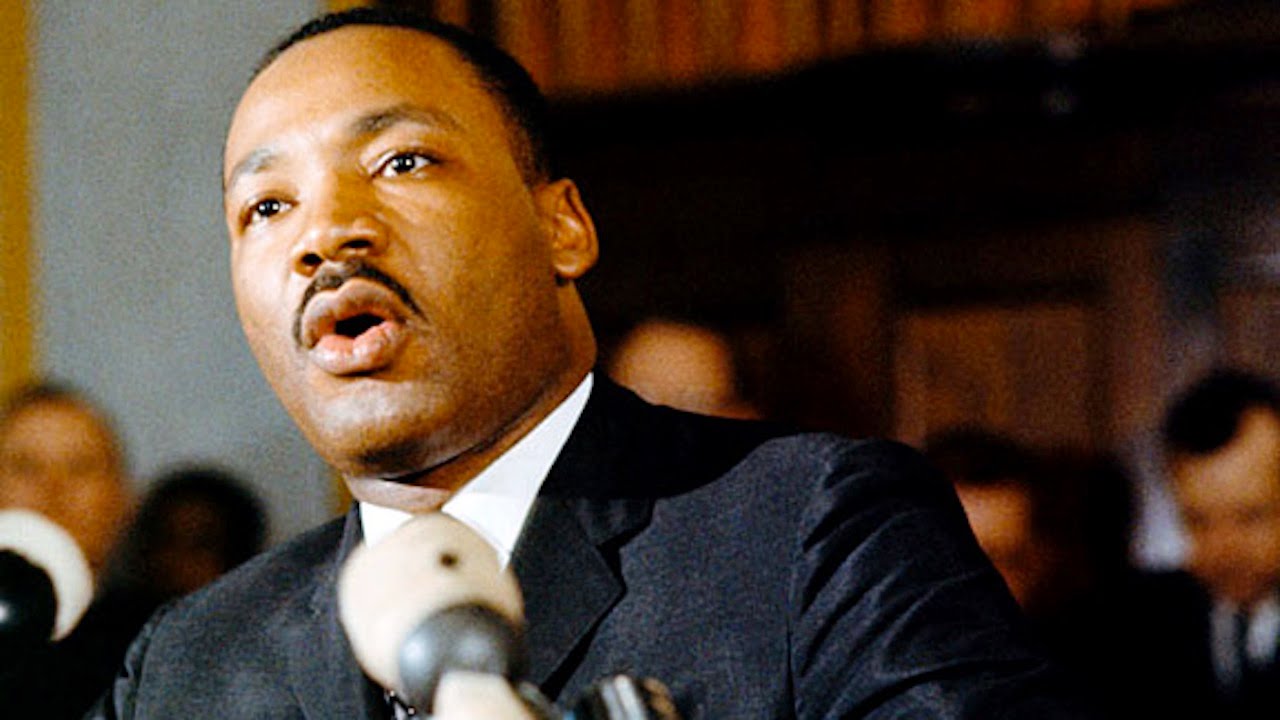
MARTIN LUTHER KING Jr

Martin Luther King Jr. (1929-1968) was a Baptist minister and social activist who played a key role in the American civil rights movement from the mid-1950s until his assassination in 1968. Inspired by advocates of nonviolence such as Mahatma Gandhi, King sought equality for African Americans, the economically disadvantaged and victims of injustice through peaceful protest. He was the driving force behind watershed events such as the Montgomery Bus Boycott and the March on Washington, which helped bring about such landmark legislation as the Civil Rights Act of 1964 and the Voting Rights Act of 1965. King was awarded the Nobel Peace Prize in 1964 and is remembered each year on Martin Luther King Jr. Day, a U.S. federal holiday since 1986.
The second child of Martin Luther King Sr. (1899-1984), a pastor, and Alberta Williams King (1904-1974), a former schoolteacher, Martin Luther King Jr. was born in Atlanta, Georgia, on January 15, 1929. Along with his older sister, the future Christine King Farris (born 1927), and younger brother, Alfred Daniel Williams King (1930-1969), he grew up in the city’s Sweet Auburn neighborhood, then home to some of the most prominent and prosperous African Americans in the country.
A gifted student, King attended segregated public schools and at the age of 15 was admitted to Morehouse College, the alma mater of both his father and maternal grandfather, where he studied medicine and law. Although he had not intended to follow in his father’s footsteps by joining the ministry, he changed his mind under the mentorship of Morehouse’s president, Dr. Benjamin Mays, an influential theologian and outspoken advocate for racial equality. After graduating in 1948, King entered Crozer Theological Seminary in Pennsylvania, where he earned a Bachelor of Divinity degree, won a prestigious fellowship and was elected president of his predominantly white senior class.
King then enrolled in a graduate program at Boston University, completing his coursework in 1953 and earning a doctorate in systematic theology two years later. While in Boston he met Coretta Scott (1927-2006), a young singer from Alabama who was studying at the New England Conservatory of Music. The couple wed in 1953 and settled in Montgomery, Alabama, where King became pastor of the Dexter Avenue Baptist Church. They had four children: Yolanda Denise King (1955-2007), Martin Luther King III (born 1957), Dexter Scott King (born 1961) and Bernice Albertine King (born 1963).
The King family had been living in Montgomery for less than a year when the highly segregated city became the epicenter of the burgeoning struggle for civil rights in America, galvanized by the landmark Brown v. Board of Education of Topeka decision of 1954. On December 1, 1955, Rosa Parks (1913-2005), secretary of the local National Association for the Advancement of Colored People chapter, refused to give up her seat to a white passenger on a Montgomery bus and was arrested. Activists coordinated a bus boycott that would continue for 381 days, placing a severe economic strain on the public transit system and downtown business owners. They chose Martin Luther King Jr. as the protest’s leader and official spokesman.
By the time the Supreme Court ruled segregated seating on public buses unconstitutional in November 1956, King, heavily influenced by Mahatma Gandhi (1869-1948) and the activist Bayard Rustin (1912-1987), had entered the national spotlight as an inspirational proponent of organized, nonviolent resistance. (He had also become a target for white supremacists, who firebombed his family home that January.) Emboldened by the boycott’s success, in 1957 he and other civil rights activists–most of them fellow ministers–founded the Southern Christian Leadership Conference (SCLC), a group committed to achieving full equality for African Americans through nonviolence. (Its motto was “Not one hair of one head of one person should be harmed.”) He would remain at the helm of this influential organization until his death.
martin luther king jr, civil rights, civil rights leader, black history, coretta king, selma to montgomery march, alabama state capitol, 1965, John Lewis, Reverend Jesse Douglas, James Forman, Ralph Abernathy
Martin Luther King leading march from Selma to Montgomery to protest lack of voting rights for African Americans. Beside King is John Lewis, Reverend Jesse Douglas, James Forman and Ralph Abernathy. March 1965.
In his role as SCLC president, Martin Luther King Jr. traveled across the country and around the world, giving lectures on nonviolent protest and civil rights as well as meeting with religious figures, activists and political leaders. (During a month-long trip to India in 1959, he had the opportunity to meet family members and followers of Gandhi, the man he described in his autobiography as “the guiding light of our technique of nonviolent social change.”) King also authored several books and articles during this time.
In 1960 King and his family moved to Atlanta, his native city, where he joined his father as co-pastor of the Ebenezer Baptist Church. This new position did not stop King and his SCLC colleagues from becoming key players in many of the most significant civil rights battles of the 1960s. Their philosophy of nonviolence was put to a particularly severe test during the Birmingham campaign of 1963, in which activists used a boycott, sit-ins and marches to protest segregation, unfair hiring practices and other injustices in one of America’s most racially divided cities. Arrested for his involvement on April 12, King penned the civil rights manifesto known as the “Letter from Birmingham Jail,” an eloquent defense of civil disobedience addressed to a group of white clergymen who had criticized his tactics.
Later that year, Martin Luther King Jr. worked with a number of civil rights and religious groups to organize the March on Washington for Jobs and Freedom, a peaceful political rally designed to shed light on the injustices African Americans continued to face across the country. Held on August 28 and attended by some 200,000 to 300,000 participants, the event is widely regarded as a watershed moment in the history of the American civil rights movement and a factor in the passage of the Civil Rights Act of 1964.
The march culminated in King’s most famous address, known as the “I Have a Dream” speech, a spirited call for peace and equality that many consider a masterpiece of rhetoric. Standing on the steps of the Lincoln Memorial–a monument to the president who a century earlier had brought down the institution of slavery in the United States—he shared his vision of a future in which “this nation will rise up and live out the true meaning of its creed: ‘We hold these truths to be self-evident, that all men are created equal.'” The speech and march cemented King’s reputation at home and abroad; later that year he was named Man of the Year by TIME magazine and in 1964 became the youngest person ever awarded the Nobel Peace Prize.
In the spring of 1965, King’s elevated profile drew international attention to the violence that erupted between white segregationists and peaceful demonstrators in Selma, Alabama, where the SCLC and Student Nonviolent Coordinating Committee (SNCC) had organized a voter registration campaign. Captured on television, the brutal scene outraged many Americans and inspired supporters from across the country to gather in Selma and take part in a march to Montgomery led by King and supported by President Lyndon Johnson (1908-1973), who sent in federal troops to keep the peace. That August, Congress passed the Voting Rights Act, which guaranteed the right to vote–first awarded by the 15th Amendment–to all African Americans.
The events in Selma deepened a growing rift between Martin Luther King Jr. and young radicals who repudiated his nonviolent methods and commitment to working within the established political framework. As more militant black leaders such as Stokely Carmichael (1941-1998) rose to prominence, King broadened the scope of his activism to address issues such as the Vietnam War and poverty among Americans of all races. In 1967, King and the SCLC embarked on an ambitious program known as the Poor People’s Campaign, which was to include a massive march on the capital.
On the evening of April 4, 1968, King was fatally shot while standing on the balcony of a motel in Memphis, where he had traveled to support a sanitation workers’ strike. In the wake of his death, a wave of riots swept major cities across the country, while President Johnson declared a national day of mourning. James Earl Ray (1928-1998), an escaped convict and known racist, pleaded guilty to the murder and was sentenced to 99 years in prison. (He later recanted his confession and gained some unlikely advocates, including members of the King family, before his death in 1998.)
After years of campaigning by activists, members of Congress and Coretta Scott King, among others, in 1983 President Ronald Reagan (1911-2004) signed a bill creating a U.S. federal holiday in honor of King. Observed on the third Monday of January, it was first celebrated in 1986.
martin luther king jr, civil rights, civil rights leader, Dr. Martin Luther King Jr., 1968, martin luther king jr.'s funeral procession, atlanta, georgia
Thousands of people follow the casket as the body of Martin Luther King is brought to the memorial service. Atlanta, Georgia April 9, 1968

Diamond Platnumz and AKA new Hit Ijumaa Hii (12022016)

AKA(South Africa) and Diamond Platnumz(Tanzania)
Kituo cha Television cha MTV BASE kimepewa tena nafasi ya kuionyesha kwa mara ya kwanza video ya mdundo mpya wa mwimbaji wa bongofleva Tanzania Diamond Platnumz time hii akiwa na rapper wa South Africa AKA na huo mdundo unaitwa ‘MAKE ME SING‘
diamond 2
Mdundo huu mpya unadrop Ijumaa ya February 12 2016 ambapo toka February 9 Diamond Platnumz aliwaambia mashabiki zake wakae tayari kwa single mpya kama inavyosomeka Tweet yake hapa chini.Diamond 4
Vilevile Diamond anatarajia kwenda Marekani soon kwa ajili ya kufanya kazi na Producer Swizz Beatz, Alicia Keys na kufanya video ya kolabo yake na mwimbaji wa Marekani Neyo ambaye walisharekodi tayari audio, tazama hii Interview na millardayo hapa chini akiongelea hiyo na ishu nyingine.


Cc Millardayo

HILLARY CLINTON

Hillary Diane Rodham Clinton (born October 26, 1947) is an American politician who served under President Barack Obama as the 67th United States Secretary of State from 2009 to 2013. She is the wife of the 42nd President of the United States Bill Clinton, and was First Lady of the United States during his tenure from 1993 to 2001. Clinton subsequently served as a United States Senator from New York from 2001 to 2009, and is a candidate for President of the United States in the 2016 presidential election.
A native of the Chicago area, Hillary Rodham graduated from Wellesley College in 1969, where she became the first student commencement speaker. She went on to earn her J.D. from Yale Law School in 1973. After a stint as a congressional legal counsel, she moved to Arkansas, marrying Bill Clinton in 1975. She co-founded Arkansas Advocates for Children and Families in 1977, became the first female chair of the Legal Services Corporation in 1978, and was named the first female partner at Rose Law Firm in 1979. While First Lady of Arkansas from 1979 to 1981, and 1983 to 1992, she led a task force that reformed Arkansas' public school system, and served on the board of directors of Wal-Mart among other corporations.
Hillary and Bill Clinton
As First Lady of the United States, her major initiative, the Clinton health care plan of 1993, failed to reach a vote in Congress. In 1997 and 1999, she played a leading role in advocating the creation of the State Children's Health Insurance Program, the Adoption and Safe Families Act and the Foster Care Independence Act. The only First Lady to have been subpoenaed, she testified before a federal grand jury in 1996 regarding the Whitewater controversy, although no charges against her related to this or other investigations during her husband's presidency were ever brought. Her marriage to the president was subject to considerable public discussion following the Lewinsky scandal of 1998, and overall her role as First Lady drew a polarized response from the American public.
After moving to New York, Clinton was elected in 2000 as the first female senator from the state, the only First Lady ever to have sought elected office. Following the September 11 attacks, she voted for and supported military action in Afghanistan and the Iraq Resolution, but subsequently objected to the George W. Bush administration's conduct of the Iraq War, as well as most of Bush's domestic policies. Clinton was re-elected to the Senate in 2006. Running for the Democratic nomination in the 2008 presidential election, Clinton won more primaries and delegates than any other female candidate in American history, but ultimately lost the nomination to Obama.
As Secretary of State in the Obama administration from January 2009 to February 2013, Clinton was at the forefront of the U.S. response to the Arab Spring and advocated the U.S. military intervention in Libya. She took responsibility for security lapses related to the 2012 Benghazi attack, which resulted in the deaths of American consulate personnel, but defended her personal actions in regard to the matter. Clinton viewed "smart power" as the strategy for asserting U.S. leadership and values, by combining military power with diplomacy and American capabilities in economics, technology, and other areas. She used social media to communicate the U.S. message abroad. Leaving office at the end of Obama's first term, she authored her fifth book and undertook speaking engagements before announcing her second run for the Democratic nomination in the 2016 presidential election in April 2015.

Tuesday, 9 February 2016

STAY CONNECTED!!


Coffee never knew that it would taste so nice and sweet,before it met milk and sugar.We are good as individuals but we become better when we meet and blend with the right people.
Stay Connected...
"The world is full of nice people...If you can't find one...BE THE ONE!!"
  👇
 Loyan!